
Yes. Cleaning products can go out of date or become less effective over time, but there is no single expiry period that applies to every cleaner. How long a product remains suitable depends on its formulation, whether it has been opened or diluted, how it has been stored and the manufacturer’s instructions. If a container carries an expiry date, use-by date or shelf-life guidance, follow that information first.
For businesses, the practical question is not only whether a cleaner is “expired”, but whether it can still be identified, has been stored correctly and remains suitable for the intended task. If you are unsure about an older product, check the label and safety information and ask the supplier or manufacturer before using it.
How long do cleaning products last?
Cleaning product shelf life varies considerably. A sealed, correctly stored general cleaner may remain usable for a long period, while products containing ingredients that are more sensitive to heat, light or time can lose performance sooner. Once a product has been opened, contaminated, transferred to another container or diluted, there are more factors that can affect its condition.
Rather than relying on a blanket rule, check:
- the expiry, use-by or manufacturing information on the original container;
- the manufacturer’s stated shelf life or product data;
- storage instructions on the label and safety data sheet;
- whether the product has been opened or diluted; and
- whether its appearance, smell, consistency or packaging has changed unexpectedly.
If you manage cleaning stock for a workplace, Cleancare’s range of professional cleaning chemicals provides product-specific options for different cleaning tasks.
Do unopened cleaning products expire?
They can. An unopened container is generally better protected from contamination and evaporation than an opened one, but being sealed does not make a product indefinitely usable. Age, storage temperature, sunlight and the stability of the formulation still matter. Check the container for a date or batch information and refer to the manufacturer’s guidance where available.
If an unopened product has been stored for a long time and there is no clear date or guidance, do not assume that it is suitable simply because the seal is intact. This is especially important where the product is being relied on for disinfection, food-area hygiene or another controlled cleaning process.
How storage affects cleaning chemical shelf life
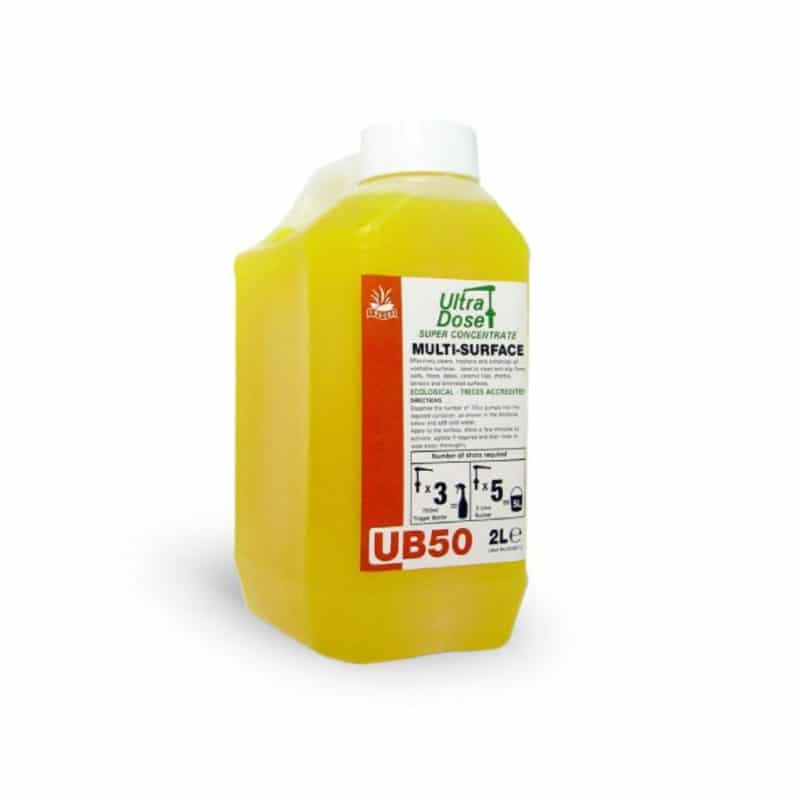
Poor storage can shorten the useful life of cleaning chemicals. Keep products in their original, clearly labelled containers and follow the storage conditions stated by the manufacturer. Avoid leaving chemicals in direct sunlight or in areas exposed to unnecessary heat, freezing conditions or large temperature swings.
For more detailed storage guidance, see Where Should Cleaning Chemicals Be Stored?.
Signs a cleaning product may no longer be suitable
A product that is old is not automatically unusable, but visible or unexplained changes are a reason to stop and check it before use. Warning signs can include:
- separation that does not resolve as the manufacturer directs;
- unexpected thickening, clumping, sediment or particles;
- a major change in colour or odour;
- a swollen, leaking, damaged or badly corroded container;
- a missing or unreadable label; or
- a diluted solution that cannot be confidently identified or dated.
Do not try to judge chemical safety by smell alone, and do not mix an old product with another chemical in an attempt to restore or dispose of it. Follow the product label and your workplace procedures for safe handling and disposal.
Do different types of cleaning products go out of date?
Carpet cleaner and carpet shampoo
Carpet cleaning liquids and shampoos can deteriorate with age or poor storage. Check the manufacturer’s shelf-life information, especially for older opened containers. If the product has separated, changed consistency or cannot be identified, replace it rather than risking poor cleaning results or using an unsuitable solution in equipment. Browse carpet and upholstery cleaning chemicals if replacement stock is needed.
Bleach and chlorine-based cleaners
Bleach and other chlorine-based products are particularly sensitive to storage conditions and can lose available chlorine over time. Heat and light can accelerate that deterioration. Keep them as directed on the label and avoid relying on an old product where a defined concentration is important.
Disinfectants
A disinfectant should be used in accordance with its label, required dilution, contact time and shelf-life guidance. If it is beyond the manufacturer’s stated life, has been stored incorrectly or you cannot verify what is in the container, replace it. Cleancare supplies commercial disinfectants for professional cleaning applications.
Glass cleaner
Glass cleaner can also age, particularly after opening or if stored in unsuitable conditions. If the liquid has changed noticeably or no longer performs as expected, check the product guidance before continuing to use it. See Cleancare’s glass cleaners for commercial options.
Oven and heavy-duty kitchen cleaners
Strong kitchen and oven cleaners should always be used according to the specific label and safety instructions. Do not assume an old container is still at its intended strength. If the product is damaged, unidentified or outside its stated shelf life, replace it. Browse kitchen cleaning chemicals for suitable professional products.
Washing-up liquid
Washing-up liquid may remain usable for a considerable period when stored correctly, but product-specific guidance still takes priority. Replace it if there are unexplained changes in consistency, smell or appearance, or if the container is no longer properly labelled. Cleancare’s washing-up liquids include options for commercial use.
What about diluted cleaning solutions?
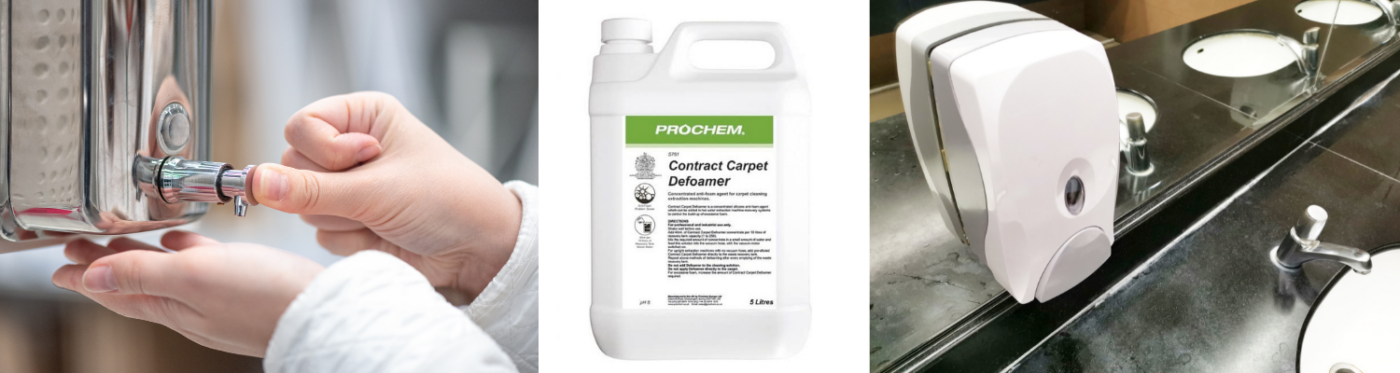
Dilution changes the way a cleaning product should be managed. Only dilute a concentrate as directed, use the correct dosing method and prepare an amount appropriate to the job or the manufacturer’s stated in-use period. Water, containers and handling can introduce variables that are not present in the original concentrate.
Every secondary container should be clearly labelled in line with your workplace procedures. Do not keep unidentified diluted chemicals in a cleaning cupboard. If staff cannot confidently establish what a solution is, how it was mixed or when it was prepared, it should not be used.
A simple stock-control routine for cleaning cupboards
Good stock control reduces the chance of old or unidentified products accumulating and helps businesses avoid unnecessary waste. A practical routine is to:
- keep products in their original containers wherever possible;
- record or rotate stock so older suitable products are used first;
- avoid buying more chemical than the site can reasonably use;
- keep labels readable and secondary containers clearly identified;
- store products according to the label and safety data;
- separate incompatible products as required by your site procedures; and
- review slow-moving or duplicate products before reordering.
Need help simplifying your cleaning chemical range?
Cleancare can help commercial teams review the products they use and choose practical cleaning chemicals for the job, without keeping unnecessary duplicate stock.
Can you use expired cleaning products?
Do not use a cleaning product solely because it still looks normal. If it is beyond a stated expiry or use-by date, follow the manufacturer’s instructions. Where no date is shown, consider the product’s age, storage history, condition and intended use. If effective cleaning or disinfection depends on a defined concentration, replacing uncertain stock is the safer operational choice.
For an old container with no readable label, unknown contents or signs of deterioration, do not use it on a surface and do not combine it with another chemical. Follow the supplier, manufacturer and workplace disposal guidance.
Frequently Asked Questions
Some do, while others use manufacturing dates, batch codes or shelf-life guidance instead. Check the original packaging and manufacturer information rather than assuming one standard lifespan applies to every cleaner.
It can. A sealed container reduces exposure to contamination, but the formulation can still age. Check the manufacturer’s shelf life and consider how the product has been stored.
Smell is not a reliable test of product condition or performance. Check the label, date or batch information, storage history and manufacturer guidance.
Do not use an unidentified solution. Follow your workplace procedure and the relevant supplier or manufacturer guidance for safe handling and disposal.
For products where age after opening or dilution matters, recording the date can make stock control clearer. Follow the product instructions and your site’s chemical management procedures.
Yes. If you can explain the surface, cleaning task, site type and current product, Cleancare can help you identify a suitable professional option.
Replacing old or unsuitable cleaning stock?
